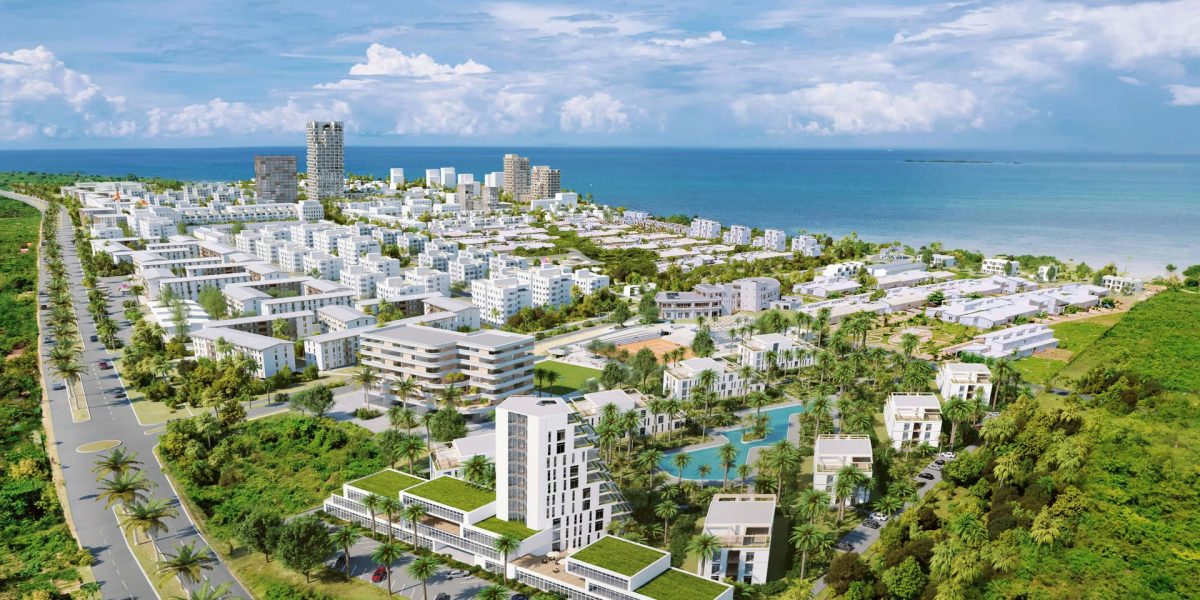
I get asked this question more than any other: can a foreigner actually buy property in Zanzibar, and how does the process work?
The short answer is yes — and the process is more straightforward than most people expect. This is asked by international buyers from the UK, Germany, South Africa, the UAE, and across East Africa and you. What follows is everything you need to know, explained honestly and without the sales pitch.
Before we get into the legal mechanics, consider the demand context. Zanzibar recorded 917,167 international arrivals in 2025 — nearly one million visitors, representing a 25 percent increase from 2024’s record of 736,755. European tourists account for over 70 percent of arrivals, with Italy, Germany, France, and Poland leading source markets. These are the same demographics that drive short-term rental demand for the properties we are discussing. The investment case for Zanzibar property is not speculative — it is built on documented, accelerating visitor growth.
Can foreigners legally own property in Zanzibar?
Yes. Foreign nationals can legally purchase and own property in Zanzibar. There is no requirement for a local partner, no nationality restrictions, and no cap on the number of properties a foreigner can own.
The ownership instrument is called a Certificate of Right of Occupancy — universally referred to as the CRO. This is a 99-year leasehold title, and it applies to everyone on the island: Tanzanian citizens and foreign nationals alike. There is no freehold land in Zanzibar. The CRO is fully transferable, fully mortgageable, and renewable at the end of its term. For practical investment purposes, it functions identically to freehold ownership in most jurisdictions.
The critical requirement for foreign buyers is that the property must be within a ZIPA-approved development. ZIPA — the Zanzibar Investment Promotion Authority — is the government body established under the Zanzibar Investment Act No. 10 of 2023 that approves and regulates foreign investment in the island’s real estate sector. Every credible developer operating in Zanzibar carries ZIPA approval. You should confirm this status independently before proceeding with any purchase, regardless of what a sales representative tells you.
Step 1 — Choose your area and development carefully
Before anything legal or financial, the most important decision you will make is where to buy and why. Zanzibar’s main investment zones have distinct profiles, different yield structures, and suit different buyer types. Numbers should drive this decision, not photographs.
Paje on the east coast consistently delivers the highest rental yields on the island — 12 to 18 percent gross annually — driven by world-class kite conditions, a growing digital nomad community, and a dual-season demand pattern that prevents the long vacancy periods common in single-season markets. Entry prices start from $75,000. Key developments include Paje Square by CPS Africa, Vela Zanzibar by Spectral Ltd, and ANGA Zanzibar by LZDM Ltd.
Nungwi on the north coast is the island’s premium resort destination, validated by international hotel brands including RIU, Mantis, and Royal Zanzibar Beach Resort. Gross yields run 10 to 15 percent. Entry prices start from $80,000. Nungwi suits buyers who want lifestyle use alongside investment income — it has the strongest premium resale market on the island and the most liquid exit options.
Fumba on the south-west peninsula is currently Zanzibar’s fastest-appreciating zone. A 3,000-hectare ZIPA Special Economic Zone is simultaneously delivering a 35,500-seat AFCON 2027 stadium, an IIT Madras university campus, a government city, a major mall, and marina infrastructure. Yields of 8 to 13 percent, with estimated annual appreciation of 11 percent. Entry from $95,000 through CPS Africa’s Fumba Town. This is primarily a capital appreciation play rather than a pure yield investment.
Stone Town and its surroundings offer the island’s only UNESCO World Heritage-constrained market — heritage properties with permanently limited new supply — alongside major new developments including the $250 million Infinity Hills in Kikwajuni and Chukwani Shores by PADDCO on the western coast. Yields of 6 to 10 percent, with the strongest structural scarcity argument of any area on the island.
Use the Zanzibar ROI Calculator to model rental income, net yield, and capital growth projections for any area before making a decision. The tool uses real market data to generate realistic scenario ranges, not developer marketing projections.
Step 2 — Appoint an independent lawyer before paying anything
This is the step that separates buyers who complete confidently from those who encounter problems. Appoint a Zanzibar-registered lawyer who acts exclusively for you — not for the developer, not for the agent. Your lawyer’s sole job is to protect your interests throughout the transaction.
Before you pay a single dollar, your lawyer should verify the following:
- The land is registered and free of encumbrances or third-party claims
- The developer holds valid ZIPA approval for the specific development
- The CRO for the specific plot or unit is clean and uncontested
- The Sale and Purchase Agreement is structured to protect your interests, not only the developer’s
- The payment structure — whether escrow, insurance, or direct — is properly documented
- The developer has adequate construction financing to complete the project
Legal fees in Zanzibar typically run 1 to 2 percent of the purchase price. This is not a cost to negotiate away. A good property lawyer in Zanzibar will communicate in English, has experience with international buyers, and will raise concerns that no one else in the transaction will raise. I can point you toward the right people — book a call and I will make the introduction.
Step 3 — Pay the reservation deposit to secure the unit
Once you have identified your property and your lawyer has confirmed due diligence is in order, you pay a reservation deposit to take the unit off the market while the Sale and Purchase Agreement is finalised. This is typically $2,000 to $5,000 depending on the development.
Before paying any reservation deposit, confirm in writing whether it is refundable if legal due diligence subsequently reveals a material problem. At Vela Zanzibar and The Hills Nungwi, pre-completion funds are insured by an international carrier — providing a level of payment protection that most Zanzibar developments do not offer. Ask every developer the same question: what happens to my money if construction does not complete?
Step 4 — Review and sign the Sale and Purchase Agreement
Your lawyer will review the Sale and Purchase Agreement (SPA) in full before you sign it. The SPA governs everything that matters: the payment schedule, the completion date, the detailed specification of the property, the penalty clauses if either party defaults, the process for CRO title transfer, and the circumstances under which you can exit the contract.
Most Zanzibar developments use a staged payment structure tied to construction milestones rather than a lump sum. A typical structure looks like this:
- 30 percent on signing the SPA
- 25 to 30 percent at foundation completion
- 20 percent at superstructure
- 10 percent at fit-out and finishing
- 10 percent on handover at completion
Some developments offer extended payment plans of 24 to 36 months, making the entry point accessible even for buyers who cannot fund the full purchase price upfront. Sign the SPA only after your lawyer confirms they are satisfied with every clause. Never sign under time pressure — a legitimate developer will hold a unit for a reasonable review period.
Step 5 — Make staged payments during construction
Payments should be made strictly in accordance with the milestone schedule defined in the SPA. Maintain records of every international wire transfer — you will need documented payment history for the title registration process at completion.
All payments should go to the named company account of the developer or escrow account specified in the SPA. Never transfer funds to a personal account, regardless of what is requested. Most premium Zanzibar developments price in US dollars and accept international wire transfers from any jurisdiction without restriction.
Step 6 — Title registration at completion
On completion of construction and handover of the unit, your lawyer handles the formal registration of the CRO in your name at the Zanzibar Land Registry. This is the legal transfer of ownership. You will receive the CRO document — your title deed — which should be stored securely, ideally with certified copies held separately.
Government registration fees and stamp duty at the Land Registry typically add 1 to 2 percent to the total acquisition cost. Factor this into your budget from the outset rather than treating it as a surprise at the end of the process.
The residence permit — what you qualify for
Foreign investors who commit $100,000 or more in a ZIPA-approved development qualify for a 2-year renewable Class C-11 residence permit. The permit covers the investor, their spouse, and up to four children under the age of 20. This permit allows you to live in Zanzibar legally while your property generates rental income — a genuinely attractive arrangement for buyers considering semi-relocation alongside investment.
The permit is not automatic. You must apply through the Zanzibar immigration authority after your purchase is completed and your CRO is registered. The application requires your investment certificate, your CRO, and supporting identification documents. The processing time is typically 4 to 8 weeks. I assist buyers through this application as part of the end-to-end guidance I provide.
Taxes and ongoing costs you need to budget for
Understanding the full cost of ownership prevents surprises that erode your actual yield. Here is what you need to know:
- Withholding tax on rental income: 10 percent, deducted at source by managed rental programmes before distributing your revenue share. If you manage rentals independently, you are responsible for declaring and remitting this tax yourself.
- Capital gains tax on resale: 10 percent for non-residents, applied to the net capital gain rather than the full sale price. Retain all purchase documentation — you will need it to establish your cost base at the point of sale.
- Annual land rent: Nominal, typically $200 to $400 per year per unit depending on location. Paid through the property management company in a managed rental scheme.
- Service charges: Vary by development, typically covering maintenance, security, and common area management. Confirm the annual service charge figure before signing the SPA.
- Acquisition costs: Legal fees (1 to 2 percent), stamp duty and Land Registry fees (1 to 2 percent), and reservation deposit. Total acquisition costs typically run 3 to 5 percent above the purchase price.
The managed rental model — how passive income actually works
Most investment-grade Zanzibar developments operate a managed rental programme. This means you own the property but the developer’s operational team — or a third-party hotel management company — handles everything: marketing the unit on booking platforms, managing guests, handling maintenance, and remitting your revenue share monthly or quarterly.
The standard revenue split is 60 percent to the owner and 40 percent to the management company, though this varies by development. With average tourist stays of 8 nights per visit and peak-season occupancy rates above 75 percent in well-managed properties, this model can generate genuinely passive income without requiring any active involvement from the owner.
The key question to ask any managed rental programme is: what is the actual historical occupancy rate achieved, not the projected rate? Ask for audited figures if available. Established operations like Fumba Town’s TOC (Town Operations Company) and the Nungwi Dreams by Mantis management team have track records you can interrogate. Newer developments can only offer projections.
Developer credibility — the due diligence most buyers skip
Zanzibar’s property market has grown fast. Not every developer operating on the island has the financial backing, construction management capability, and operational track record to complete what they have sold. This is the due diligence that matters most for off-plan purchases and it is consistently the step most buyers skip.
Questions to ask before committing to any development:
- What completed projects does this developer have in Zanzibar? Can I visit them?
- How is construction financed — from buyer deposits alone, or does the developer have independent financing?
- Has the developer ever missed a delivery deadline? By how much?
- Who is the construction contractor, and what is their track record?
- Are buyer payments insured or held in escrow, or do they go directly to the developer?
CPS Africa has the strongest delivery track record in the Zanzibar market, having completed The Soul Paje (266 units), multiple phases of Fumba Town, and other projects before launching Paje Square and BURJ Zanzibar. Infinity Developments, whose $600 million portfolio includes the Anantara Zanzibar Resort, has demonstrated the capital depth to back large-scale commitments. These track records matter. A compelling architectural render is not a track record.
Working with a local specialist — why it changes the outcome
The most common mistake I see from international buyers approaching the Zanzibar market is relying exclusively on a developer’s sales team or a platform with commercial arrangements with specific developers. Neither is structurally incentivised to tell you when a project carries risk or when a different area might suit your investment profile better.
My role is different. I work with buyers who want honest, independent guidance on which property, in which area, with which developer, fits their specific goals — yield, capital growth, lifestyle use, or some combination. I track every development on the island personally, visit sites regularly, and maintain direct relationships with the teams behind the major projects.
If the right answer for your situation is a development I am not commercially aligned with, I will still tell you that. That approach is what builds the kind of trust that makes buyers refer their friends and family — which is how most of my clients find me.
Book a free 30-minute call and I will walk you through the current market, the developments I recommend for your profile, and the exact process for your situation — wherever in the world you are based. There is no fee for the consultation and no obligation.

Zanzibar-based real estate specialist and co-founder of Zanziholics Digital Agency. Living and working on the island since 2020, I have guided international buyers through the Zanzibar property market across Paje, Nungwi, Fumba, and Stone Town. I track every development personally and provide data-backed, honest guidance.